
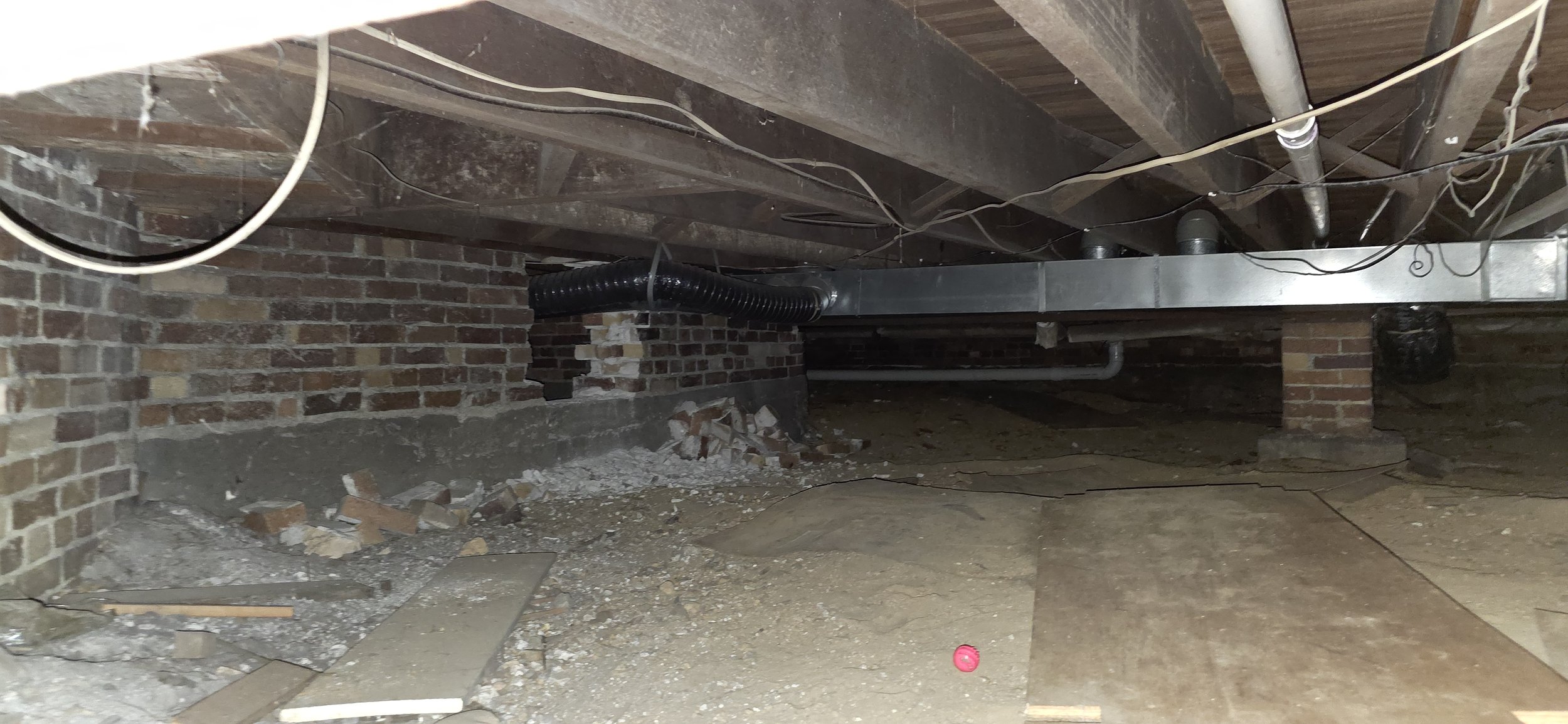
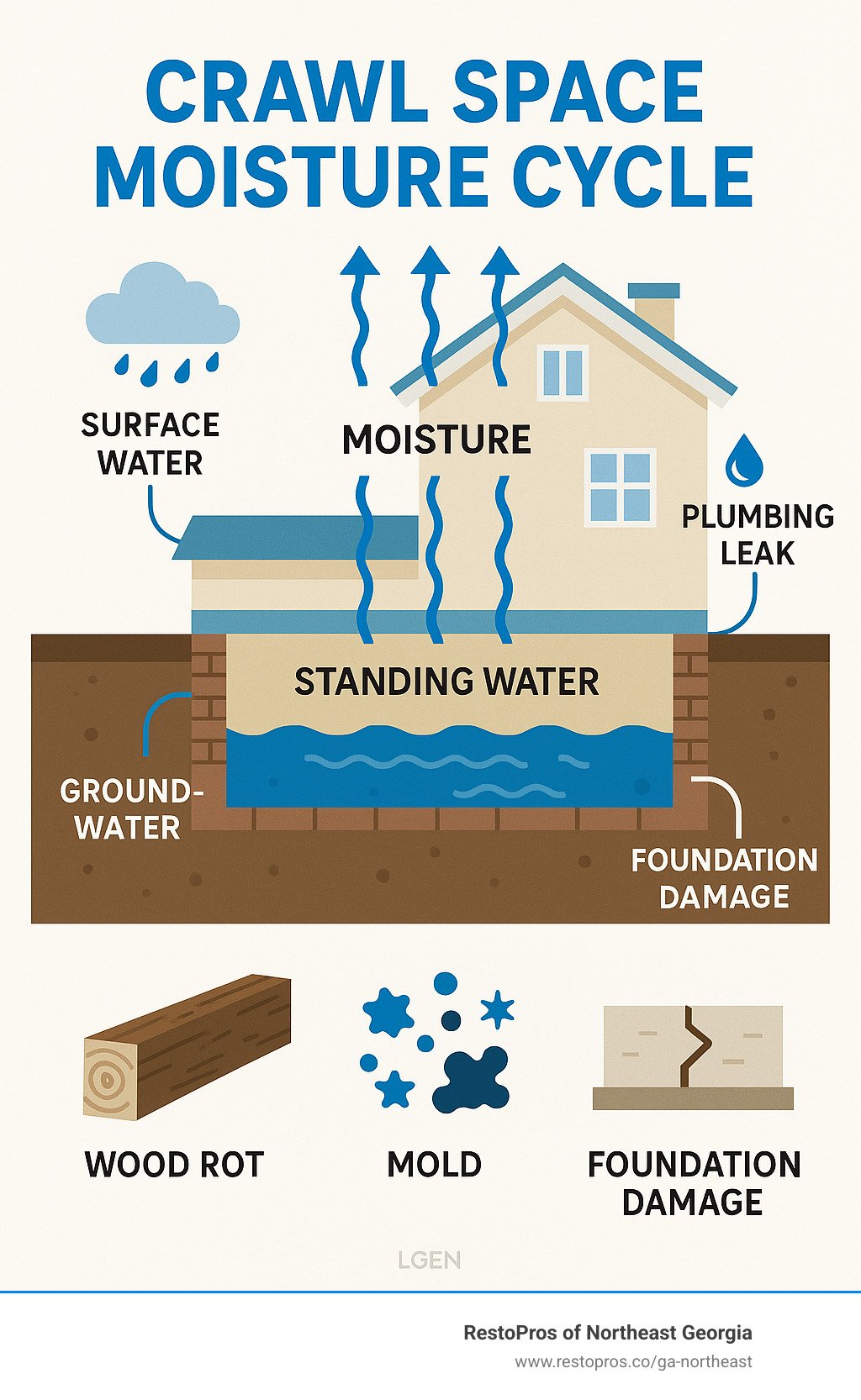
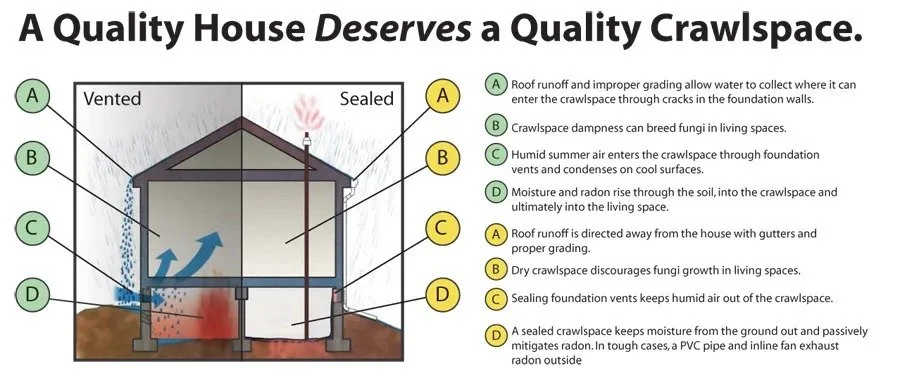
The dirt floor in a crawlspace is constantly giving off moisture. That moisture rises into the wood framing, the insulation, and the air, and it is the single most common reason we find mold under a house. Encapsulation seals the space off from that moisture so it stays dry.
We line the floor, and walls, of the crawlspace with a heavy duty vapor barrier and seal it at the seams and the edges. The point is to put a real barrier between the bare ground and everything above it. Done right, the space goes from damp and musty to dry and stable.
Before we seal anything, we deal with what is already there. If there is standing water, a drainage problem, or mold that has already started, that gets handled first. Sealing moisture and mold inside a crawlspace just makes the problem worse, so we do it in the right order.
A dry crawlspace means you stop feeding the mold under your floors, your framing is not slowly rotting, and the house is usually more comfortable and more efficient, since a big share of the air upstairs starts down there. If your floors feel cold and damp, or the house has a musty smell you cannot track down, the crawlspace is the first place we would look.
Call (618) 477-2761 to have your crawlspace inspected.
Crawlspace Encapsulation
Stop Hidden Moisture Before It Destroys Your Home
-
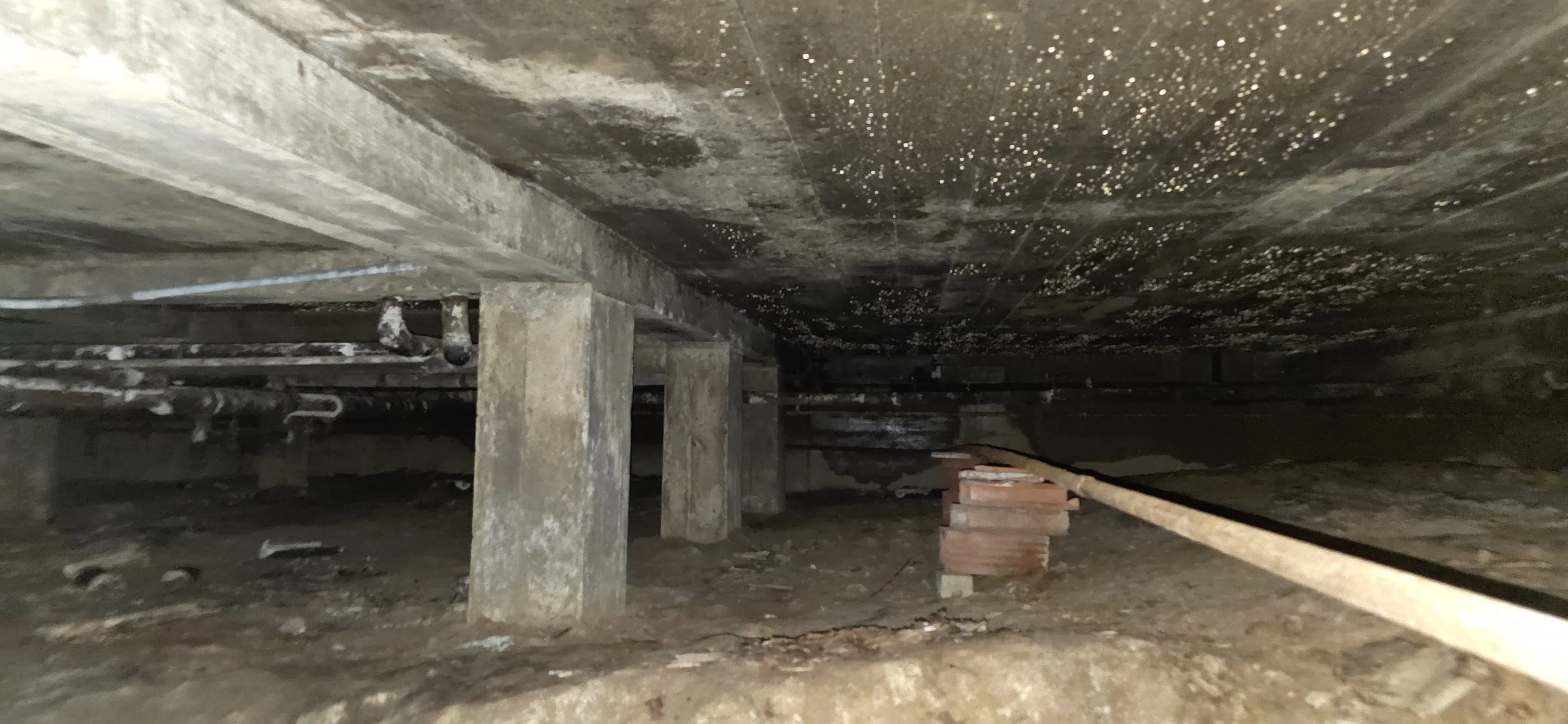
Moisture Barrier Installation
Seal the crawlspace with a durable vapor barrier to prevent water infiltration and reduce humidity.
-
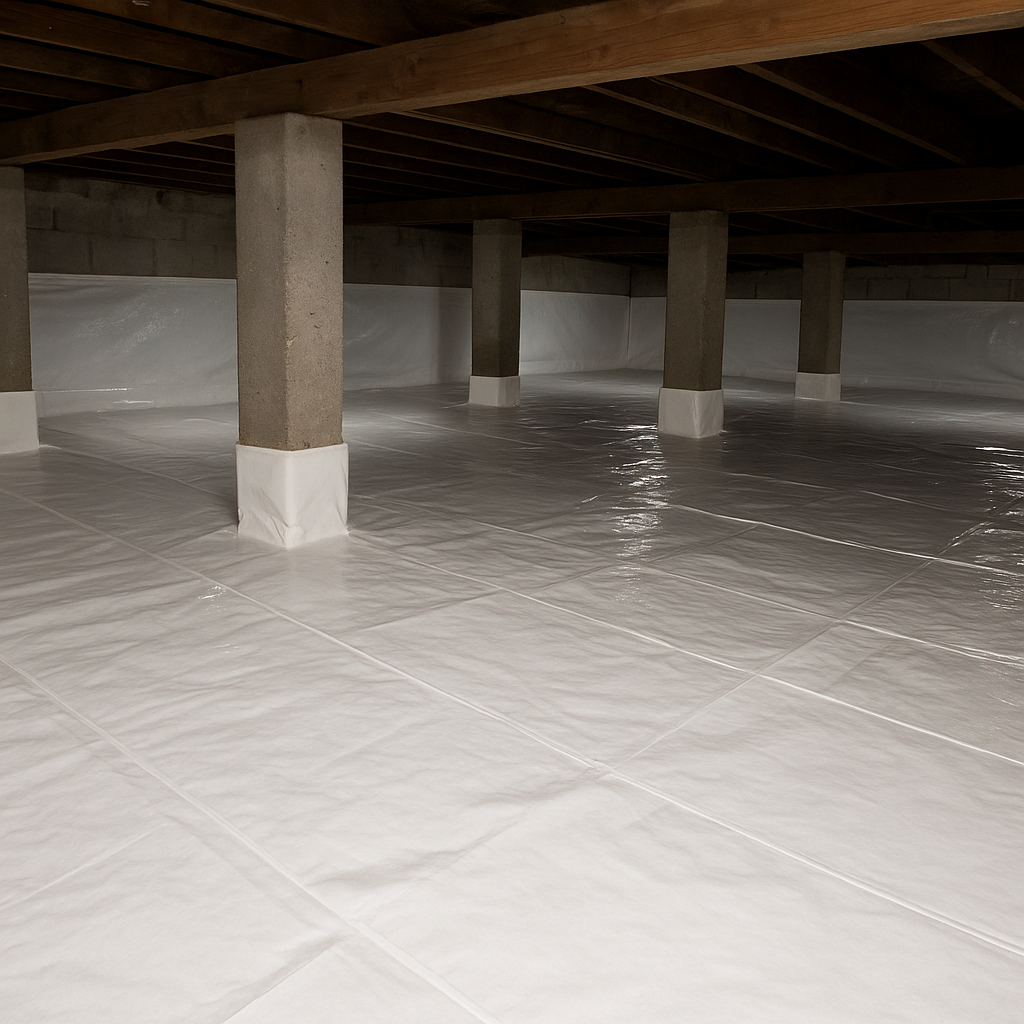
Air Quality & Mold Prevention
Encapsulation stops mold growth, reduces musty odors, and improves overall indoor air quality.
-
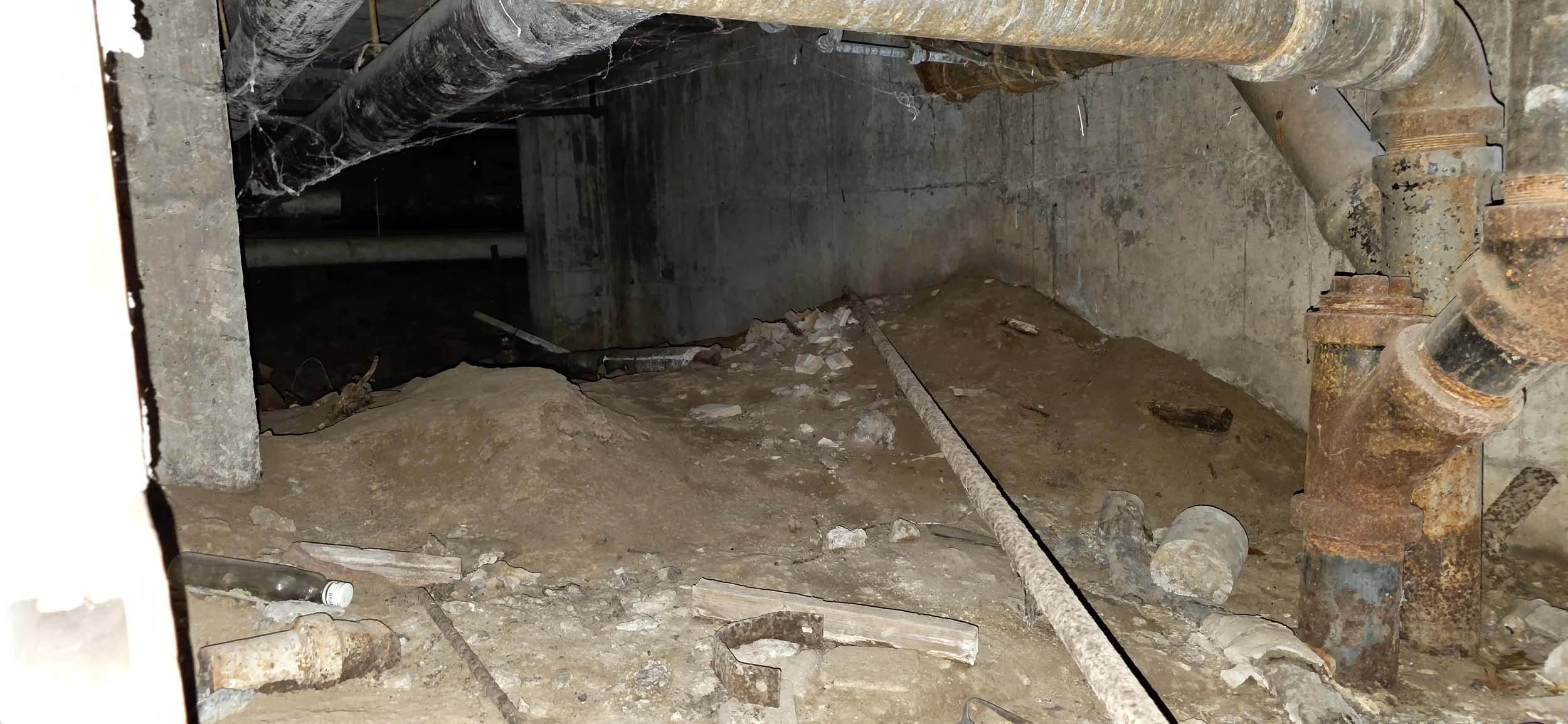
Energy Efficiency & Structural Protection
Properly sealed crawlspaces help regulate temperature, protect wooden structures, and reduce heating and cooling costs.
Crawlspace Encapsulation: Protect Your Health
A damp, unsealed crawlspace can harbor mold, bacteria, and allergens that affect indoor air quality. Professional encapsulation controls moisture, stops microbial growth, and creates a healthier living environment.
-
Professionals evaluate moisture, mold, and ventilation issues to create a tailored plan.
-
Remove debris, treat mold, and install durable vapor barriers to block moisture and contaminants.
-
Optimize ventilation, control humidity, and verify air quality to ensure long-term health and safety.
Our NORMI certification supports industry-recognized inspection and remediation practices.

Our ISSA certification reflects our commitment to professional-grade cleaning and environmental safety.
Certified NORMI Mold Remediator ensuring compliant, professional-grade mold mitigation.
NORMI-certified Mold Assessor trained to identify, test, and evaluate mold contamination accurately.
Our AHERA certification ensures accurate asbestos inspections and adherence to federal safety standards.
Claims Prevention & Procedure Council
Soilair Technologies Solar Cleaning Partner and training certified.

Certified by the IJCSA to ensure safe, compliant, and effective mold removal.